The Death of the Collective: How broken data is ruining football storytelling
It’s terrible to open X the morning after a big football match.
TikTok is even worse.
YouTube… don’t even bother.
Football data is everywhere in match storytelling today, yet somehow it feels completely broken.
The lack of context is striking.
I used to think this was an analytics problem. But the more I watch the conversations happening after big games, the more I realise something: it’s a 10x worse storytelling problem.
Take yesterday’s Champions League night.
The Hero Narrative
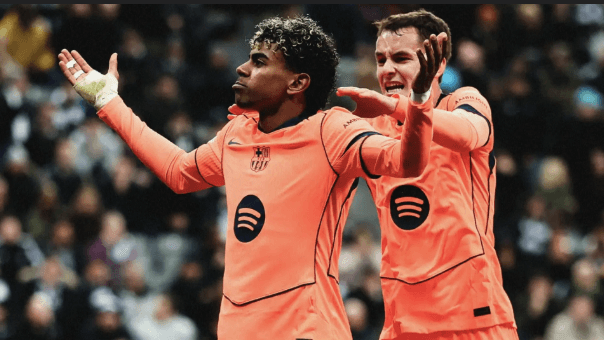
“Lamine Yamal saves Barça.”
That headline was everywhere.
The reason is simple: he converted the last-minute penalty that allowed Barcelona to equalize.
But that penalty didn’t appear out of nowhere.
Two players decided, in a desperate moment, to take the game into their own hands. One broke the lines with a brilliant pass. The other attempted a dribble inside the box that forced the foul.
Without them, there is no penalty.
Yet I didn’t see a single headline mention their names.
Because they didn’t get the G or the A.
And that’s exactly where the storytelling breaks.
The G/A Obsession
The same thing happens everywhere.
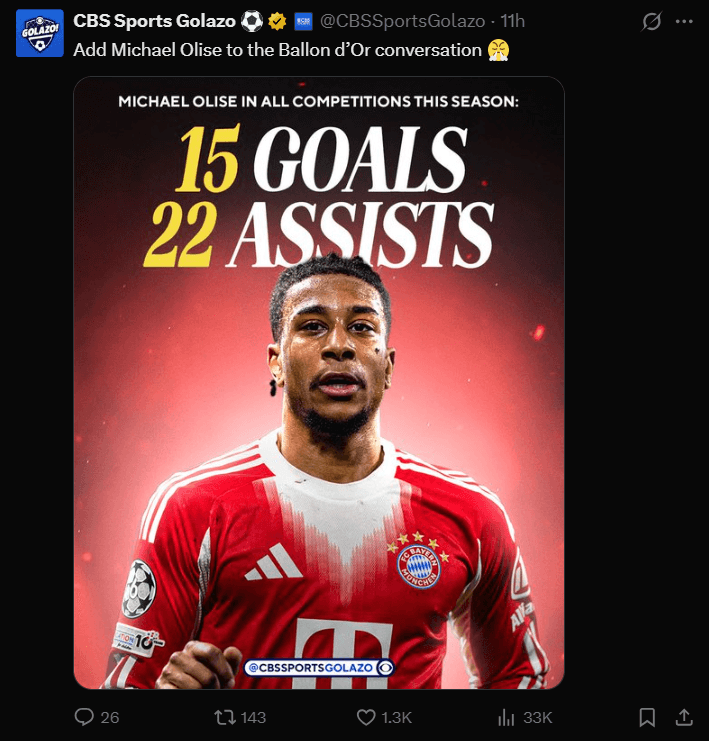
Take Michael Olise against Atalanta.
Two goals and one assist. A fantastic performance.
But if you scroll through the posts about the game, most of them stop at the same format:
2G + 1A — Top player.
That’s it.
No mention of his collective influence and overall impact.
Just the box score.
And once you start noticing it, you realise this is everywhere.
Harvey Barnes scored Newcastle’s only goal against Barcelona. He now has 9 G/A in the Champions League, which is genuinely impressive.
But I’ve already seen posts using that number as an argument for an England call-up.
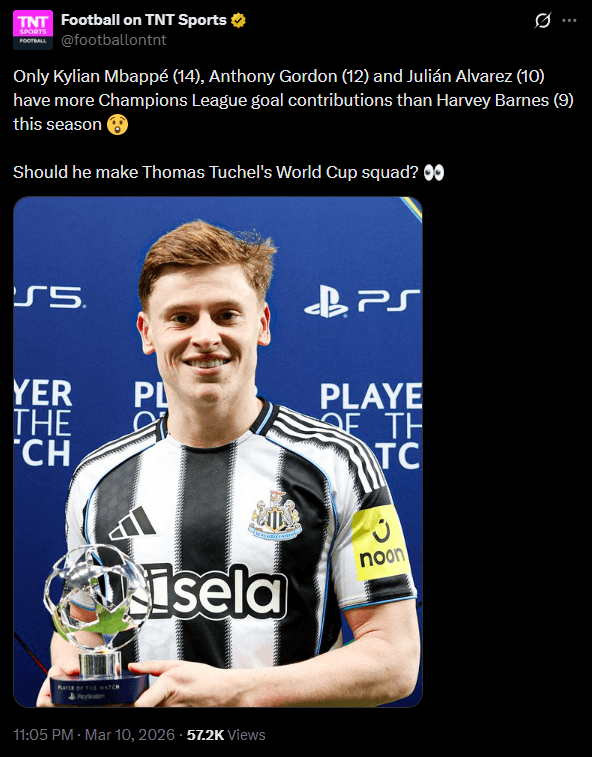
As if squad building in international football was simply about picking the players with the highest raw numbers.
The Villain Narrative

The other side of the individual-stat obsession is even worse: the scapegoat narrative.
Ronald Araujo was blamed everywhere for the goal Barcelona conceded.
Why?
Because the goal came from “his zone”.
But a minute earlier he had made a huge offensive run to support the attack, pushing forward to create an overload. The effort left him with cramps.
So when the counterattack came, he couldn’t recover.
Where were the other ten players? Where was the communication? Who was supposed to cover that space at that moment?
Nobody asks those questions.
Because the data point is simple: Goal from Zone X → Player X is responsible.
Case closed.
The Illusion of Objectivity
Even the metrics that are supposed to be “objective” for fans suffer from the same problem.
Player ratings.
Score a "G" and your rating jumps.
Get an "A" and it jumps again.
It doesn’t matter if you were a passenger for most of the match.
It doesn’t matter if your goal was the final touch of a collective move built by five teammates.
The numbers reward the final action.
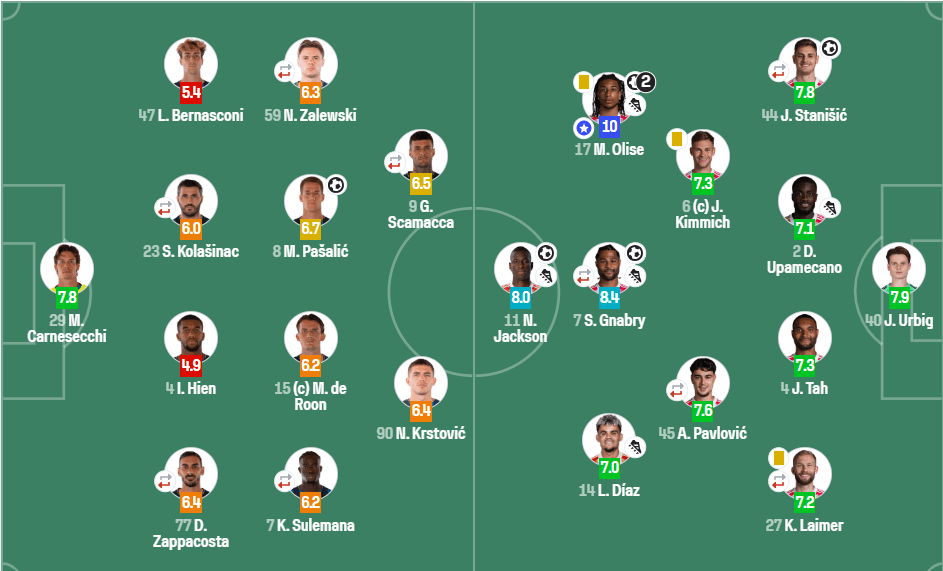
The storytelling follows the numbers.
And suddenly football, a game that only works through collective mechanisms is narrated like an individual sport. There is a reason why football is such a sparse sport, it isn't Basketball.
My final point
Sure, it’s easy to cite two stats to talk about a match in a quick post. But not at the cost of losing the entire context along the way.
That’s laziness. And I refuse to believe we’re incapable of doing better.
Because football is not a spreadsheet. It’s eleven players constantly solving problems together on a pitch.
And until our data storytelling starts reflecting that reality, we will keep missing the most interesting part of the game: the collective intelligence behind every moment that actually matters.